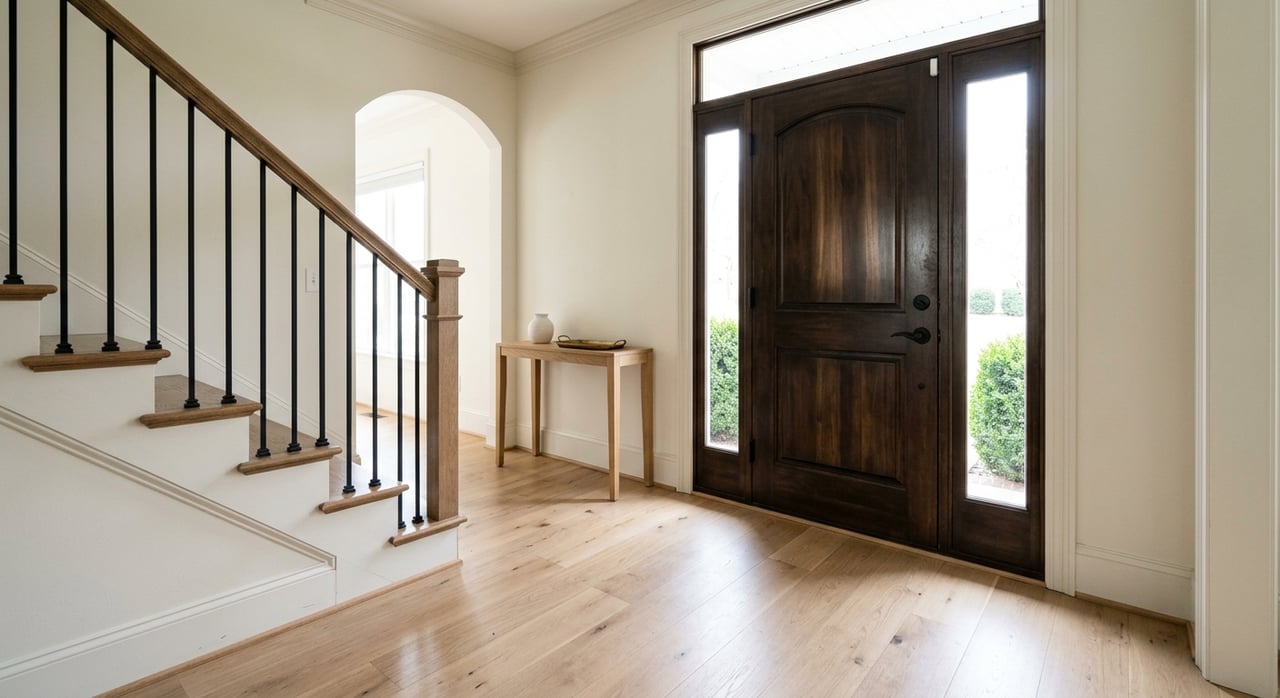
How Greenville Buyers Can Compete Without Overpaying
Jason Boozer July 9, 2026
Jason Boozer July 9, 2026
If you are trying to buy a home in Greenville right now, it can feel like your only choices are to move fast or pay too much. The good news is that the market data tells a more balanced story. You can still compete, but you do not have to treat every offer like a bidding war. With the right prep, smart offer terms, and a clear budget, you can stay competitive without stretching past your comfort zone. Let’s dive in.
Greenville is still an active market, but it is not moving at the same speed in every segment. In the Greater Greenville Association of REALTORS® region, pending sales rose 6.6% over 12 months, median sales price increased 1.6% to $319,900, and inventory climbed 28.2%. That mix matters because rising inventory can create more choices and better leverage for buyers.
The pressure also changes by property type and price point. Single-family homes had 3.5 months of supply, while condos had 4.7 months of supply. The fastest-selling price band was $150,000 and below at 48 days, which shows that lower price ranges can still move quickly while other parts of the market may give you more room to negotiate.
City-level numbers support that same idea. Realtor.com reported a May 2026 median listing price of $396,500, about 1,894 active listings, and a 41-day median time on market in Greenville. On average, homes sold for about 1.22% below asking, which is a helpful reminder that overpaying is not the default strategy.
Before you think about offer price, decide what monthly payment feels comfortable for you. Mortgage rates still have a big effect on affordability, and Freddie Mac reported the average 30-year fixed rate at 6.43% on July 2, 2026. Even a small jump in price can raise your payment more than many buyers expect.
That is why your budget should lead the process, not the maximum amount a lender says you might qualify for. The Consumer Financial Protection Bureau notes that only you can decide how much you want to spend. In a market like Greenville, that discipline can keep you from chasing a house that looks manageable on paper but feels tight every month.
A smart budget should include more than principal and interest. Greenville County notes that property taxes depend on value, assessment ratio, and millage rate. If the home will be your owner-occupied legal residence, the county says you may qualify for the 4% assessment ratio and school operating tax exemption, but you must file the application with supporting documents by January 15.
A strong preapproval can make your offer more competitive without changing your price. According to the CFPB, a preapproval letter shows a lender is willing to lend to you pending further confirmation, and it helps sellers see you as a serious buyer. It also does not commit you to that lender.
The CFPB also recommends getting preapprovals from at least three lenders, then comparing the Loan Estimates, monthly payments, taxes, insurance, points, and fees. If you do this within a short window, it should not have a major impact on your credit score. That gives you a better chance to choose financing that fits your goals instead of rushing into the first option.
In Greenville, this matters because a clean financing setup can be just as persuasive as a higher offer. Sellers want confidence that the deal will close. A buyer who is fully prepared often stands out more than a buyer who simply throws out a bigger number.
One of the best ways to compete without overpaying is to protect your cash. If you qualify for down payment or closing cost help, you may be able to keep more money available for earnest money, inspections, moving costs, or repairs after closing.
SC Housing offers Palmetto Home Advantage in all 46 counties. The program does not require you to be a first-time buyer, works with conventional, FHA, VA, and USDA loans, and offers forgivable down payment assistance of 0%, 3%, or 4% of the loan amount with no monthly payment. SC Housing says the statewide income limit is $137,500.
There are also more targeted options depending on your situation. SC Housing’s Homebuyer Program is geared toward first-time homebuyers and low-to-moderate-income families, with a veteran exception. The City of Greenville also posts down payment assistance for qualifying first-time buyers within city limits, with assistance up to 20% of the sales price capped at $40,000, along with income and price limits.
For some buyers, Greenville County Redevelopment Authority’s PATH program may also help with down payment and closing costs if they meet the program rules, including a homebuyer education requirement for county employees. The key point is simple: if assistance lowers your cash-to-close burden, you may not need to push your offer price higher just to feel competitive.
Price matters, but it is not the only thing sellers care about. A clean, clear offer can make a real difference, especially in a market where many homes are selling near list instead of far above it.
Fannie Mae notes that offers can include credits, contingencies, timing details, and escalation clauses with a predetermined cap. That means you have several ways to strengthen your position while still protecting your budget.
Here are a few ways buyers often compete without overpaying:
These moves can improve the seller’s confidence without forcing you to abandon your financial guardrails.
Earnest money can help show that you are serious. Fannie Mae says a typical earnest money deposit is 1% to 3% of the offer price. In some situations, a stronger earnest money deposit can make your offer feel more solid, even if your price is not the highest.
That said, earnest money should still fit your comfort level and the protections in your contract. The goal is to make your offer attractive, not reckless. A thoughtful strategy is usually more effective than reacting emotionally in the moment.
An escalation clause can help when you believe a home may receive multiple offers, but you still want to control your ceiling. Fannie Mae says escalation clauses can be written with a predetermined cap. That cap is important because it keeps you from drifting into a number you never intended to pay.
In Greenville, this can be especially useful when the home is in a fast-moving segment but you do not want to start with your highest possible offer. You can stay competitive while still honoring the budget you set before touring homes. That kind of discipline often matters more than trying to win at any cost.
Many buyers wonder if waiving inspection is the only way to win. Usually, it is not the best first move. Fannie Mae says a home inspection can uncover safety issues, illegal installations, and maintenance or structural problems, and a standard inspection does not cover everything.
Specialist inspections may also be needed for issues like pests, radon, asbestos, mold, or lead. That is why an inspection contingency is not just about asking for repairs. It is also a way to avoid overpaying for a home with hidden problems.
If you want to look stronger to a seller, a safer move is often to tighten the inspection timeline rather than remove the inspection entirely. You can stay competitive while still protecting yourself from expensive surprises.
Contingencies can include financing approval, inspection, and other conditions tied to the sale. Fannie Mae’s guidance makes clear that these terms are flexible, and that flexibility can help you tailor a more competitive offer.
Instead of waiving protections across the board, think about where you can reasonably streamline the process. You may be able to shorten deadlines, improve your documentation, or align your closing timeline with the seller’s needs. That approach often looks more appealing than a buyer who removes safeguards and creates risk later.
One mistake buyers make is assuming every Greenville listing needs the same aggressive approach. The local data suggest otherwise. Condos had more supply than single-family homes, and lower-priced homes moved faster than upper-end homes.
That means your offer strategy should match the property in front of you. A well-priced single-family home in a lower price band may need a faster, cleaner offer. A condo or a home in a slower segment may give you more room to negotiate price, timing, or concessions.
This is where local guidance matters. A buyer who understands the pace of the specific segment is less likely to overreact and more likely to make a smart offer.
Winning the contract is only part of the process. The CFPB warns buyers to avoid large purchases after an offer is accepted because lenders are sensitive to changes in your financial information. Your loan may still need inspection, appraisal, underwriting, and final review before closing.
So if you want to compete without overpaying, keep your plan steady all the way through. Do not add new debt, change jobs casually, or make major money moves without talking to your lender first. A calm, consistent approach can help protect the deal you worked hard to win.
Right now, Greenville rewards prepared buyers more than panicked buyers. Inventory is up, many homes are selling close to asking rather than far above it, and competition clearly varies by segment. That creates room for a strategy built on preparation, clean terms, and realistic numbers.
If you set your budget early, compare lenders, explore assistance programs, and write offers that balance strength with protection, you can compete well without overpaying. In a market like this, the goal is not just to win the house. It is to win the house on terms that still make sense for your life.
If you want practical guidance on buying in Greenville or anywhere in the Upstate, Jason Boozer offers the kind of one-on-one local insight that helps you move forward with confidence.
Stay up to date on the latest real estate trends.


Rooted in Simpsonville, I deliver expert guidance and a personalized approach to help you buy or sell with confidence—and achieve exceptional results.
Jason Boozer
148 Milestone Way Ste D Greenville, SC 29615