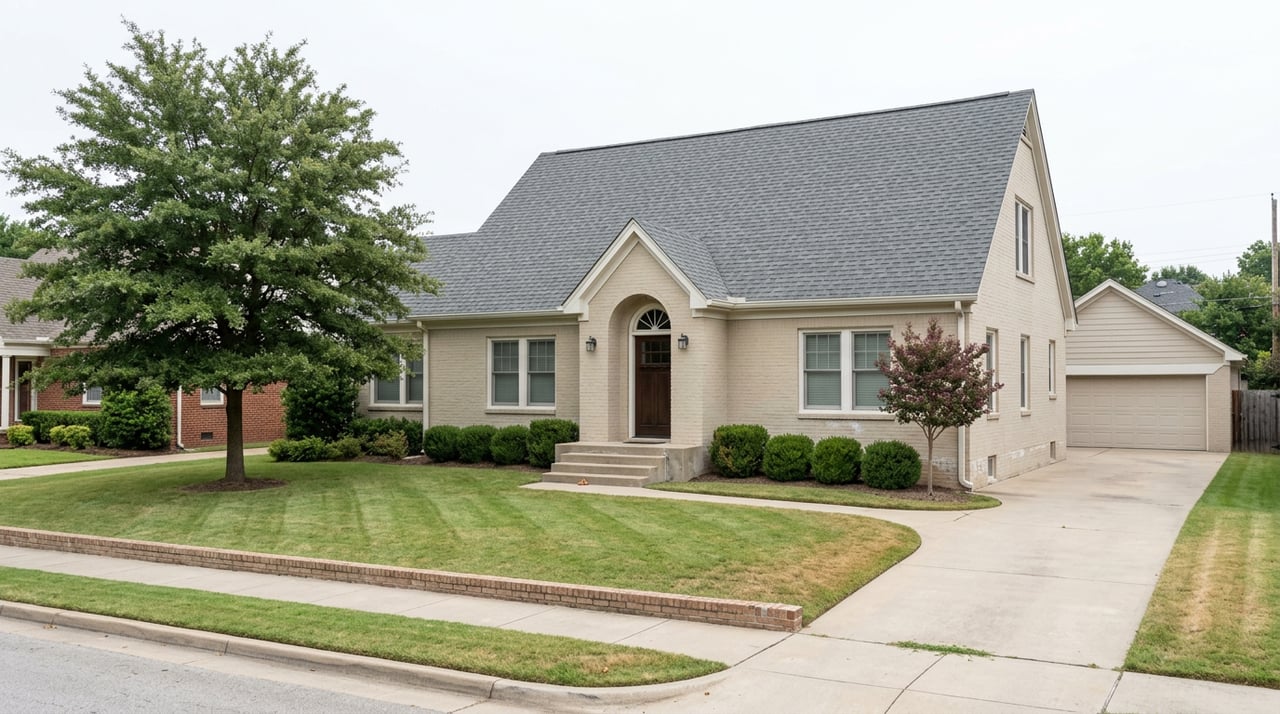
The Real Risk in Buying a Historic Greenville Home Isn't the Design Review Board
September 24, 2026
September 24, 2026
Picture a buyer under contract on a bungalow in Overbrook. The inspection came back clean enough to move forward. The lender cleared financing. The insurance quote landed the week before closing, and it looked fine on paper. Then, three weeks after they moved in, a letter arrived from the insurance company. The electrical panel needed to go, or the policy would be canceled in thirty days.
Nobody warned them about the panel. Everybody warned them about the historic district.
That mismatch is the thing worth understanding before you write an offer on a house in one of Greenville's seven historic districts or in one of the old mill villages that ring downtown. The process most buyers worry about, the Historic Review Board, is slow but knowable. You can call ahead, ask questions, and plan around it. The process almost nobody asks about, how an insurance carrier treats an 80-year-old electrical panel, is the one that can actually threaten your closing timeline, sometimes after the policy is already bound.
Greenville's Historic Review Board reviews applications for a Certificate of Appropriateness inside the city's preservation overlay districts, using the Secretary of the Interior's Standards for Rehabilitation alongside locally developed design guidelines. The city also maintains an interactive map so a buyer can confirm whether a specific address falls inside a reviewed district before making renovation plans.
That review governs exterior changes, not what a new owner does behind the front door. It matters if you plan to replace windows, change the roofline, or alter the front porch, and it means those projects need to go through the board before a permit gets pulled. It does not typically block a closing. A buyer who wants to gut a kitchen or refinish original floors does not need to wait on this process at all. The friction here shows up months after you own the house, when you're ready to start a project, not at the closing table.
The friction that can actually stall a closing lives inside the walls. Local inspectors who work Greenville's older neighborhoods, from Augusta Road to North Main to the historic mill villages, describe homes in this age range as commonly carrying original electrical service panels, galvanized plumbing layered under later updates, and foundations that have shifted with decades of Piedmont clay-soil movement. One local inspection company put it plainly: Federal Pacific and Zinsco panels still exist in plenty of Greenville homes built before 1990.
Here is why that specific detail matters more than most buyers realize. Federal Pacific breakers were manufactured with a design flaw that keeps them from tripping reliably during a power surge, and industry estimates put the failure rate for these panels between 25 and 65 percent. Insurance carriers have caught on. A growing number of them will not write a new policy on a home with an FPE or Zinsco panel at all, and others issue coverage that is contingent on a follow-up inspection after the policy is already in force.
That last part is the trap. Homeowners insurance is frequently written subject to inspection, meaning the carrier can send its own inspector after binding coverage and require repairs on a set clock, often thirty to ninety days, before the policy stays active. A full panel swap typically runs $1,500 to $2,500. That is a manageable cost if you know about it before closing. It is a scramble if it shows up in a cancellation notice after you have already moved your furniture in.
Greenville has seven locally designated historic districts: Colonel Elias Earle, East Park Avenue, Hampton-Pinckney, Heritage, Overbrook, Pettigru, and West End. Each one carries its own age profile and its own reason a buyer should ask about the panel before falling in love with the porch.
Beyond the seven official districts, Greenville's old mill villages carry the same age and the same electrical realities without carrying the same design review layer. Monaghan opened in 1900, Woodside in 1902, and Judson in 1912, each with a surrounding village of small worker cottages. The mills themselves have mostly become lofts and mixed-use space, but the cottages around them are still standalone single-family houses on the market today, built to the same era and carrying the same wiring questions as anything in Pettigru or Overbrook, minus the Certificate of Appropriateness requirement, since most mill village cottages sit outside the locally designated overlay boundaries.
The two processes move on different timelines, so the order you handle them in matters.
None of this should scare a buyer away from a Hampton-Pinckney cottage or a Judson mill house. It should just reorder where the attention goes. The board wants to know what you're doing to the outside of a house you already own. Your insurer wants to know what's already inside the walls before it agrees to cover you at all, and it reserves the right to keep asking after the ink is dry.
Does the Historic Review Board have any say over my closing date? Not directly. The board's Certificate of Appropriateness process applies to exterior renovation projects after you own the property. It has no role in the purchase transaction itself unless a prior owner completed unpermitted exterior work that surfaces during title or code research.
If my house isn't in one of the seven districts, does the panel issue still apply? Yes. The insurance underwriting risk tracks the age of the electrical system, not district boundaries. A 1910 cottage in the Woodside mill village carries the same wiring questions as a house on Pettigru Street, even though only one of them sits inside a reviewed overlay.
Can I just plan to replace the panel myself after closing instead of dealing with it now? You can, but if your insurance is written subject to inspection, the carrier's clock may start the moment the policy binds, not the moment you're ready to schedule an electrician. Knowing the panel type before you write the offer gives you room to negotiate the cost or timing into the deal itself.
Does a Certificate of Appropriateness apply to routine maintenance, like repainting the same color? The board's review is aimed at changes that alter a structure's historic character. Routine, in-kind maintenance generally moves faster through the process than a change in materials, style, or footprint, but confirming specifics with the city before starting work is always the safer move.
If you're weighing a historic district purchase in Greenville, or trying to figure out what a specific address's district status actually means for your plans, Jason Boozer has spent decades working these neighborhoods block by block. Let's Connect and talk through what a particular house, and a particular panel, might mean for your timeline.
Stay up to date on the latest real estate trends.

Rooted in Simpsonville, I deliver expert guidance and a personalized approach to help you buy or sell with confidence—and achieve exceptional results.
Jason Boozer
148 Milestone Way Ste D Greenville, SC 29615