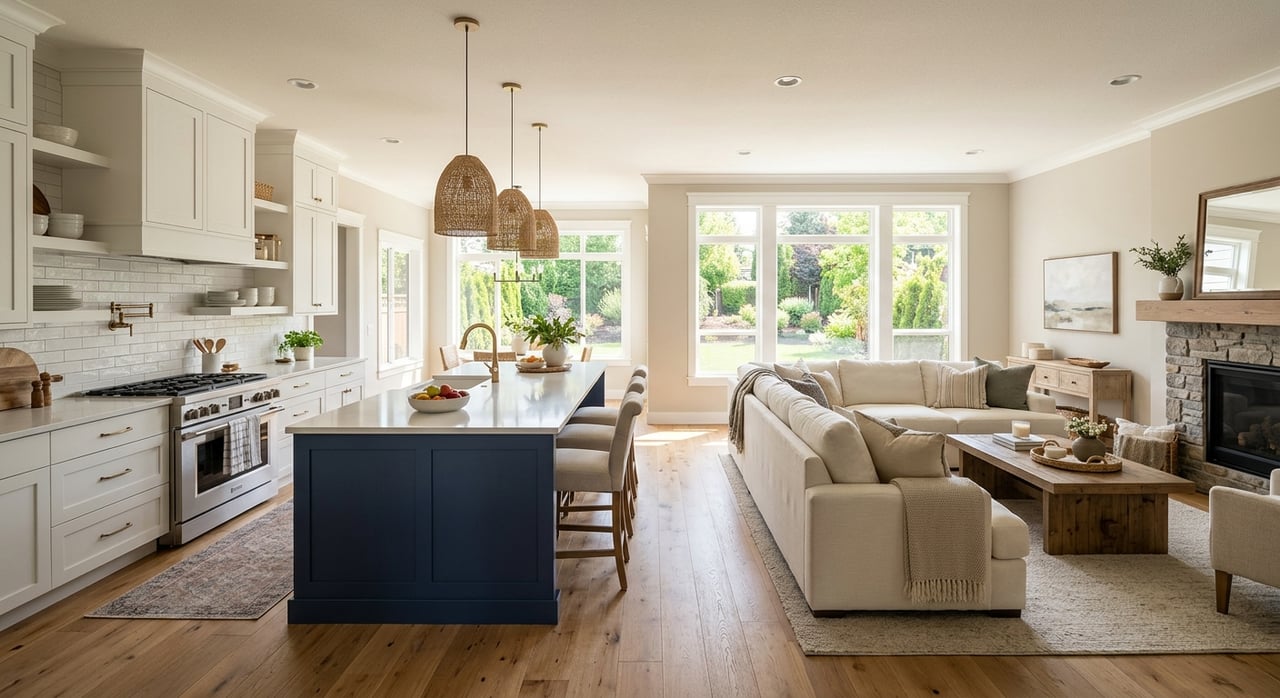
Fountain Inn vs Simpsonville Homes: How to Choose
May 21, 2026
May 21, 2026
Trying to choose between Fountain Inn and Simpsonville? You are not alone. A lot of Upstate buyers end up weighing these two areas because both offer convenient access, strong day-to-day livability, and a range of home options, but they do not feel the same once you start narrowing down what matters most. This guide will help you compare price points, housing styles, commute patterns, and lifestyle factors so you can make a more confident move. Let’s dive in.
If you tour both places back to back, the first difference you will likely notice is scale. Fountain Inn is the smaller market, with an estimated 13,786 residents in 2024, while Simpsonville is larger at 28,078 residents. Simpsonville is also more built up, with a higher population density across a slightly larger land area.
That difference shapes the day-to-day experience. Fountain Inn tends to read more like a smaller Main Street community, while Simpsonville feels more like a larger suburban hub with a broader mix of amenities. Neither is better across the board. The right choice depends on the pace and setting that fits your routine.
For many buyers, the best answer comes down to the drive you will make most often. Fountain Inn’s transportation planning documents note that downtown sits just off the I-385 corridor and can be reached from exits 22, 23, 24, and 26. Those same documents point to I-385 as the key connection toward Greenville and I-26.
Simpsonville also benefits from strong corridor access. City planning documents highlight roadway improvements, sidewalk connections, pedestrian access, and a downtown-centered development pattern. In practical terms, both cities are commuter-friendly, and both are often chosen by buyers who want access to larger Upstate job centers.
Census commute estimates are close in both places, at about 21.8 minutes for Fountain Inn and 22.4 minutes for Simpsonville. The more useful question is not which city wins by a minute or two. It is which roads, work locations, and daily stops line up better with your life.
Price is often where the decision starts to get clearer. In March 2026, Fountain Inn’s median sale price was $310,445, compared with $332,500 in Simpsonville. Median price per square foot also ran lower in Fountain Inn at $156 versus $172 in Simpsonville.
That does not mean every home in Fountain Inn is cheaper or every home in Simpsonville is more expensive. It does suggest that, on average, Fountain Inn gives buyers a slightly lower entry point. For buyers trying to balance budget with space, that can matter a lot.
Census housing values support the same general pattern. Fountain Inn’s median owner-occupied home value is listed at $255,400, while Simpsonville’s is $299,300. If you are watching your monthly payment closely, Fountain Inn may offer more breathing room in certain price bands.
Fountain Inn’s comprehensive plan shows a strong emphasis on single-family detached housing, especially in lower-density growth areas. At the same time, the city also plans for mixed-use and downtown areas that can support apartments, condos, townhomes, and other attached housing types.
Current market examples in the research show a broad range. Starter-size single-family homes can fall around $255,000 to $265,000. New construction examples were noted around $425,000 to $442,000, with acreage or premium homes reaching $600,000 and above.
Simpsonville offers a broader housing ladder in its planning documents. Medium-intensity neighborhoods can include detached homes and attached single-family homes or townhomes, while higher-intensity areas can include apartments and condos.
Current market examples reflect that wider mix. Research examples include a new townhome around $299,754, conventional single-family homes around $350,000 to $400,000, move-up homes in the $600,000s, and upper-end properties near $800,000. If you want more attached-home or mixed-use options, Simpsonville may give you more to choose from.
This is one of the most overlooked parts of the decision. Buyers often say they want a certain city, but what they really want is a certain kind of lot, neighborhood layout, or home style.
Fountain Inn may be a better fit if you are leaning toward detached homes and a more lot-oriented feel. Simpsonville may be a better fit if you want more variety, including townhomes and housing in more built-out settings. If you are not sure yet, this is where touring homes in both places can really help.
Choose the statement that sounds more like you:
If those points sound right, Fountain Inn may deserve a closer look.
Or maybe these sound more like you:
If that list fits better, Simpsonville may rise to the top.
Your home search is not only about the house. It is also about how your week feels once you live there.
Fountain Inn’s official materials highlight small-town charm, Main Street, outdoor recreation, festivals, farmers markets, and music events. The city describes downtown as a walkable grid with sidewalks, on-street parking, and a pedestrian-only plaza. The parks plan also notes six parks plus the Fountain Inn Activities Center, and city materials highlight access to the Swamp Rabbit Trail.
Simpsonville’s official materials emphasize southern charm mixed with modern convenience. The city highlights a lively downtown with restaurants, boutiques, a food hall, murals, and the initial stretch of the Swamp Rabbit Trail. Official city pages also point to Heritage Park, the CCNB Amphitheatre, multiple neighborhood and destination parks, and an Activity and Senior Center.
This point matters more than many buyers realize. Fountain Inn’s city limits extend across both Greenville County and Laurens County. That means county-based details can vary depending on the parcel, even when two homes share a Fountain Inn address.
When you are comparing properties in Fountain Inn, it is smart to verify which county the home is actually in. That can affect certain tax or service details tied to the property. It is one of those practical details that is easy to miss if you are only looking at the city name in a search result.
Fountain Inn is often a strong fit for buyers who want value, detached-home options, and a smaller-town pace. If your goal is to stretch your budget a bit further while still staying connected to the Upstate, it may check a lot of boxes.
It can also appeal to buyers who like the idea of a walkable downtown but do not want the feel of a larger suburban center. If Main Street charm, local events, and a less built-up atmosphere matter to you, Fountain Inn may feel more natural.
Simpsonville often stands out for buyers who want more choice in housing type and a deeper bench of everyday amenities. If you like having more attached-home options, a larger retail and dining base, and a more built-up suburban environment, Simpsonville may be the easier fit.
It can also work well for buyers who want a little more flexibility across price points and home styles in one market. That broader selection can be helpful if your priorities are still evolving as you search.
If you are stuck between the two, focus on the factors that affect your routine the most. Start with your commute, then look at budget, lot preference, and the kind of downtown or neighborhood environment you want around you.
A good side-by-side comparison usually includes:
When you compare the cities through that lens, the answer usually becomes much clearer. The goal is not to pick the market that sounds best in general. It is to choose the one that fits your life best right now.
If you want help comparing homes in Fountain Inn and Simpsonville with a local, practical lens, Jason Boozer can help you sort through the options and make a confident move.
Stay up to date on the latest real estate trends.
Rooted in Simpsonville, I deliver expert guidance and a personalized approach to help you buy or sell with confidence—and achieve exceptional results.
Jason Boozer
148 Milestone Way Ste D Greenville, SC 29615